Don't miss our holiday offer - 20% OFF!

Stop Fighting the B7 Chord: A Practical Guide for Clean Changes and Blues Grooves

The B7 chord is where many beginners stall. It asks your fretting hand to stretch, lift, and curl in ways that E and A never did, and it exposes every stray buzz and mute. The good news: once you tame it, your rhythm playing tightens up and the blues in E suddenly sounds like music rather than an exercise.
If you’ve ever searched the term and landed somewhere confusing, here’s your compass: in this guide, B7 means the guitar chord—an essential dominant shape you’ll use in rock, folk, country, and especially blues.
What B7 Actually Is (and Why It Feels Awkward)
B7 is a dominant seventh built from B–D#–F#–A. It wants to resolve to E, which is why it drives 12‑bar blues and countless turnarounds. On guitar, the open-position grip is fiddly because the notes are spread across non-adjacent strings, and the high E string must stay open and ringing.
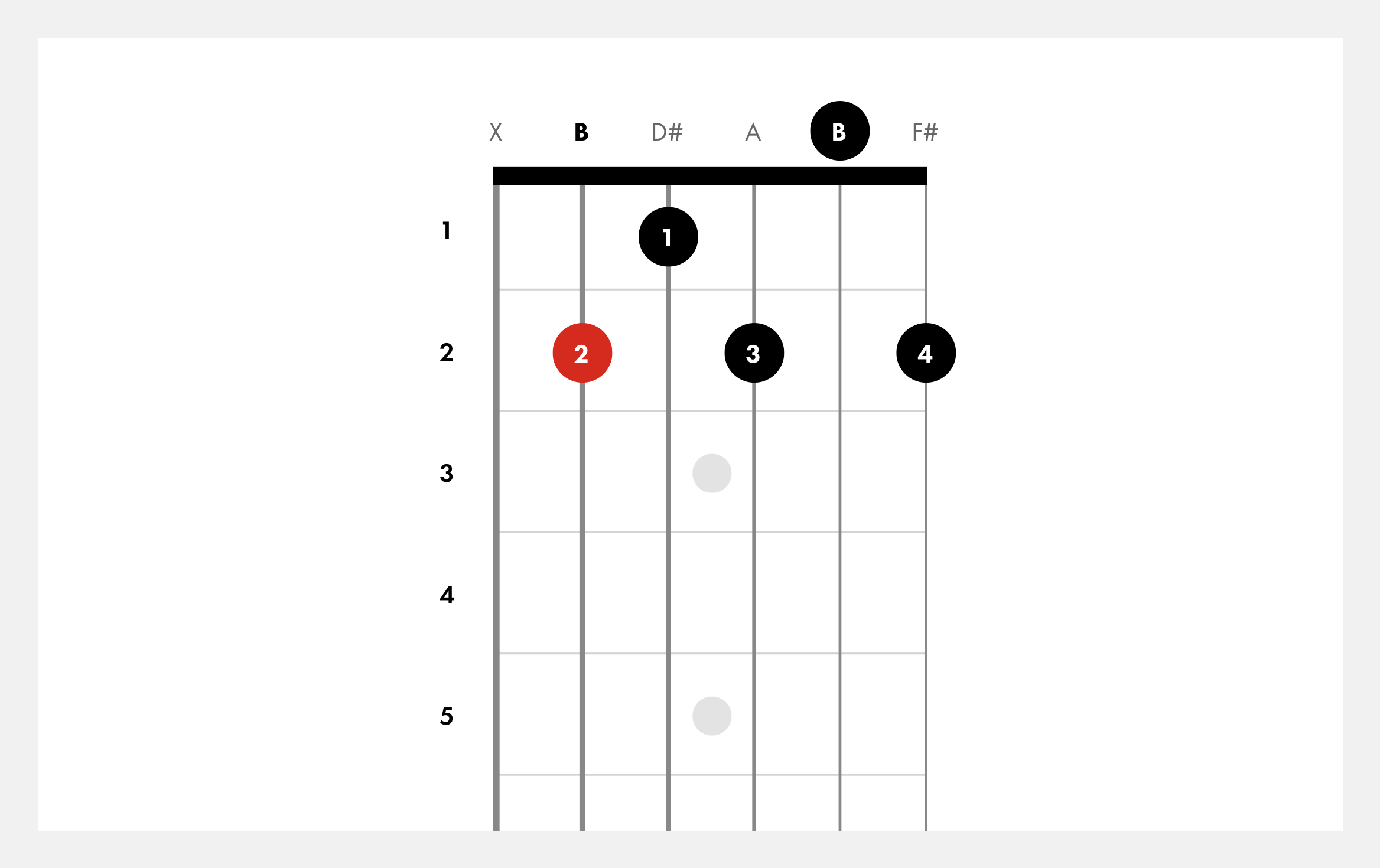
Finger Map: The Reliable Way to Grab It
| String | Fret | Note | Finger |
|---|---|---|---|
| 5th (A) | 2 | B | Middle (2) |
| 4th (D) | 1 | D# | Index (1) |
| 3rd (G) | 2 | A | Ring (3) |
| 2nd (B) | 0 | B | Open |
| 1st (E) | 2 | F# | Pinky (4) |
| 6th (E) | x | — | Don’t play (or optional 2 with thumb) |
Keep the low E muted at first. Later, adding the 6th string at fret 2 with your thumb gives a thunderous bass for blues, but it’s optional.
Set Your Hand Up for Success
- Thumb: park it roughly behind the 2nd fret, center-line of the neck. Too high and your pinky collapses; too low and you’ll over-squeeze.
- Wrist: let it drop a touch so your fingers arrive as vertical “towers.” A flat wrist makes the open B and high E strings go dead.
- Fingertip angles: curl the ring finger more than feels natural. That frees the open B string from getting suffocated.
- Press placement: all fretted notes sit just behind the fretwire—closer than you think—so you can use less force and get a clean tone.
Common Problems, Fast Fixes
- Muted high E: your ring finger is leaning. Re-curl it and nudge the pinky forward so both notes (G-string 2 and high E 2) ring independently.
- Buzz on the D string (1st fret): move the index closer to the fretwire; heavy pressure in the center of the fret wastes effort and still buzzes.
- Open B string dead: check the underside of your ring finger; rotate your wrist slightly outward to create a gap above that string.
- Slow changes: practice “ghosting” the shape in the air, then drop all fingers together. Your goal is a single, confident landing rather than four separate stabs.
Practice Drills That Actually Work
- Land-and-lift reps: form the shape, strum once, lift all fingers 2 mm, re-land. Do 20 slow reps paying attention to clean open strings every time.
- E to B7 in time: set a metronome to 60 bpm. Two beats of E, two beats of B7, repeat for two minutes. Increase by 5 bpm when you hit 90% clean changes.
- Silent switch: fret E, then switch to B7 without strumming. Tap each string with your pick to check for mutes, adjust silently, then strum once. This trains hand memory without rhythmic pressure.
Strum Patterns That Make B7 Groove
Try this classic feel: down – down – up – up – down – up over two beats each chord. Emphasize the bass note on the first downstroke. Let the open strings ring; that shimmer is part of B7’s character.
Use It Where It Matters: Blues in E
Here’s a compact 12‑bar blueprint in E that centers on B7:
- Bars 1–4: E (quick change to A7 in bar 2 if you like)
- Bars 5–6: A7
- Bars 7–8: E
- Bar 9: B7
- Bar 10: A7
- Bar 11: E
- Bar 12: B7 (turnaround chord)
Listen to how bar 9 snaps the ear to attention. That’s the dominant pull. On bar 12, hit a crisp B7 and stop—then slide back into E for the top of the form. You’ll feel the “question–answer” tension-release cycle that makes blues addictive.
Fingerstyle: Make B7 Sing
Use a Travis-style pattern: thumb alternates between the 5th string (fret 2) and the 4th string (fret 1), while index and middle pluck the open B and high E. Count “1 and 2 and 3 and 4 and,” dropping the thumb on the numbers and the fingers on the “ands.” Keep everything light—dominant chords love clarity, not force.
Watch the right hand closely. Many B7 issues are actually picking-hand problems—uneven attack or missing strings—that the fretting hand unfairly gets blamed for.
Smarter Variations and When to Use Them
- Three-note top-string B7: X X 4 4 4 X (D#–A–C# if you’re playing a B7(add6) color) or keep it simple with X 2 1 2 0 2 and strum only the top three strings for a lighter texture. Great when the vocal needs space.
- Add the low bass: wrap the thumb over to 6th string, 2nd fret for a weighty downbeat. Use sparingly; it can swamp the mix.
- Moveable shape: at 7th position, a compact B7 (7–9–7–8–7–7) offers consistency up the neck. It’s cleaner at higher tempos and helps with lead–rhythm hybrid playing.
- Color tones: sneak in a flat ninth (C) on the B string for a smoky turnaround: X 2 1 2 1 X. Resolve back to E immediately so it sounds intentional, not sour.
Tone and Gear Tips
- Acoustic: fresh strings matter; dead trebles hide the sparkle of the open B and E. Pick nearer the neck for warmth, near the bridge for bite.
- Electric: roll the tone to about 6–7, neck or middle pickup for rhythm. A touch of compression evens out open strings; too much kills dynamics.
If It Still Buzzes: Quick Diagnostics
- Action too low: repeated buzz on the 1st fret of the D string may be a setup issue, not your finger. A qualified tech can raise the nut slot slightly.
- Over-squeeze: white fingertips = tension. Relax your grip until the note just starts to buzz, then add a tiny bit of pressure. That’s the minimum effective force.
- Finger width: if your ring finger always mutes the B string, rotate the wrist so fingers approach the fretboard from a steeper angle. Micro-rotation often fixes what brute force can’t.
A 10‑Minute B7 Routine You Can Stick To
- One minute: slow finger-curl drills in the air, then land the full chord cleanly five times.
- Three minutes: E–B7 change with a metronome (60–80 bpm), two beats per chord.
- Three minutes: 12‑bar in E. Keep the right hand steady; don’t chase the left.
- Two minutes: fingerstyle pattern, alternating bass. Silence counts as much as sound.
- One minute: record a take on your phone. Listen back tomorrow to spot consistent mutes or rushed changes.
Final Thought
The B7 chord rewards precision more than strength. Approach it like a small engineering project: efficient angles, minimal pressure, clean open strings. Give it a week of focused, daily minutes and your progress will be obvious—not just in this shape, but in the polish of your rhythm playing everywhere else.